The Impact of 5G Technology on Network Infrastructures
1. Introduction
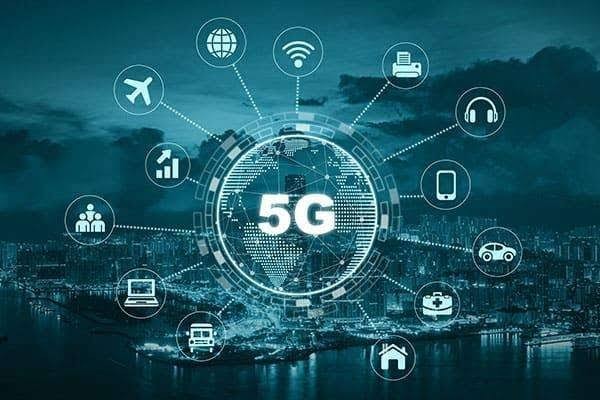
5G is the latest telecom network technology, which is in fact the fifth-generation technology, succeeding 3G and 4G. This new revolutionary technology is expected to deliver much higher speeds, extremely low latency and facilitate connection of many devices at once. In the context of growing digitization, 5G is going to act as the driving force for the development of new applications and improvements in numerous fields (Ericsson, 2020). Importance of 5G in today’s world cannot be taken for granted. In the local context, many researchers have predicted that the growth of IoT, auto-mobile cars and smart city applications depends on high-speed reliable and low-latency networks. 5G addresses these needs and provides new opportunities for sectors including healthcare and entertainment (Qualcomm, 2021).
The main objective of this article is to review the implication of 5G technology in relation to the networks’ architecture. This paper will analyze how 5G is different from the prior generations, the advantages and issues of deploying it, as well as its impact on the current network structures. Again, we will discuss the further application of 5G as well as its existing illustration to see the reality behind it. Last but not least, let discuss the future of 5G and the technologies that can appear together with it or after it.
2. Understanding 5G Technology
2.1 Definition and Key Features of 5G
5G is the acronym for the fifth generation of mobile network, aimed at improving the high speed of wireless networks. Unlike its common predecessors, the 5G operates on the higher frequency bands; this gives it the ability to offer much faster data rates and lower latencies, and it can connect other devices at the same time. The characteristics of 5G are mainly eMBB, URLLC, and mMTC (GSMA, 2020).
2.2 Comparison with Previous Generations (3G, 4G)
Earlier 3G networks provided application like internet browsing and SMS, while 4G networks offered a much higher, high-speed data service, which included services like streaming of videos in high-definition and other state-of-the-art applications. 5G goes further to provide a peak data rate of 10 Gbps; this is 100 times faster than the 4G LTE networks. Furthermore, 5G decreases latency to one millisecond, which was 30–50 milliseconds in 4G; thus, real-time application is more possible now (ITU, 2020).
2.3 Technical Advancements and Innovations in 5G
Several technical innovations distinguish 5G from earlier generations:
· Beamforming: This technology targets particular users and not in all directions; it also saves time and experiences less interference.
· Network Slicing: Enables the development of many virtual networks from a single physical 5G network based on certain needs and services.
· Massive MIMO (Multiple Input, Multiple Output): It entails the use of a large number of antennas to allow the transfer of more data at once, hence increasing the capacity of the network and performance.
· Millimeter Waves: More specifically, it operates in a higher frequency band, namely, the bands of 24 GHz and above, which, compared to the lower bands, offer larger bandwidth and higher speed, yet they have lower coverage and need more base stations (Samsung, 2021).
3. Benefits of 5G Technology
3.1 Enhanced Speed and Bandwidth
Again, one of the most apparent features of 5G technology is that it offers much higher speeds and much broader bandwidths than 4G. The layout of 5G networks is to provide maximum achievable data rate of up to 10 Mbps, which is hundred times faster than 4G (Qualcomm, 2021). This has made download process faster, with a smooth flow of full HD videos and other forms of data transfer, putting a new face on how the users of content engage with them.
3.2 Low Latency and Its Importance
The transfer time of data, which is referred to as latency in other networks, is much lower in 5G networks. 4G networks usually have a latency of 30–50 milliseconds, while 5G is expected to have a latency of 1 millisecond or even less (Ericsson, 2020). This has a low latency, which is important for maximum responsiveness in applications such as self-driving cars, tele-surgeries and AR. For instance, in self-driving cars, low latency entails that the car almost immediately responds to changes occurring around it, thus making a huge difference in the area of safety and efficiency.
3.3 Increased Connectivity and Support for More Devices
The true characteristics of the new generation 5G are the potential to increase the number of connections per unit of time exponentially. It can accommodate up to one million devices per square kilometer, a capability that is far less than what 4G can support, which goes up to around a hundred thousand devices (GSMA, 2020). It is a critical requirement for the developing Internet of Things (IoT), where billions of smart objects ranging from home appliances to industrial sensors will require a means of connecting and communicating with each other effectively. Extended networking contributes to making homes, cities, and industries smarter through innovation and therefore boosts the quality of life.
3.4 Potential Applications in Various Industries
5G technology’s benefits extend across various industries, opening up new possibilities and enhancing existing applications. 5G technology’s benefits extend across various industries, opening up new possibilities and enhancing existing applications.
· Healthcare: As for 5G, it means that telemedicine can progress a step further and even allow converts consultations through video together with surgeries with the help of robotic tools. The low latency and reliability make it possible for doctors to perform procedures from miles away (Verizon, 2021).
· Automotive: The application of 5G is Vehicle to Everything (V2X), where vehicles can communicate with other vehicles and other objects such as traffic light and signposts. This capability is important to build up autonomous vehicles and also ensure safety of these vehicles. Besides, better connectivity contributes to changing traffic conditions and actual traffic direction and routing (Ford, 2020).
· Smart Cities: Hence, smart cities 5G support a broad list of applications like intelligent transportation system, smart electricity grids, and improvements in public safety. For example, smart traffic signals can be either fixed or adapted to the data received from the flow of traffic, which helps in decreasing the time spent waiting at the traffic signals. Likewise, information via sensors that will be supported by 5G includes environmental conditions and infrastructure status for better maintenance and resource allocation (Huawei, 2021).
· Entertainment and Media: The added features of speed and bandwidth by the 5G make high-definition and Virtual reality (VR) streaming possible for the users. Sports events at the time of their live broadcast, concerts, and other entertainment can be delivered with a small delay but great picture quality, thus enhancing viewers’ experiences (Netflix, 2021).
4 Challenges in Implementing 5G Networks
4.1 Infrastructure Upgrades and Investments
Deployment of 5G technology or network entails some enhancements to infrastructure already in the markets. Contrary to 4G networks, these networks rely on small cells and densification at cell site. Small cells are generally of low-power transmitters that can be deployed in greater numbers in order to enhance coverage or capacity (Huawei, 2021). 5G entails the need to invest in these new components and fiber-optic backhaul networks to interface them. The expansion of this extensive infrastructure entails cooperation with network operators, government parties, and communities; hence, it is labor-intensive and expensive (Deloitte, 2020).
4.2 Spectrum Availability and Management
To implement 5G networks, it is necessary to use an appropriate frequency range of radio frequencies. 5G employs new frequency bands of operation higher than those used in 4G; these are the millimeter wave bands starting from 24 Gigahertz and above and while they provide large bandwidth, they have a very limited range of coverage and can be easily blocked (Samsung, 2021). This is a task that depends on the efficient use and distribution of spectrum, a topic which is very sensitive at times due to political implications. An effective allocation of the spectrum frequencies for auction or assignment by the regulatory bodies must be done in a way that will metamorphose into equitable use without compromising on interference in between users (ITU, 2020). This aspect of the competition in the frequencies by different players is an important aspect in 5G implementation.
4.3 Security Issues and Likely Risk Factors
As a result of the new technology, 5G, there are new securities challenges, which are referred to in this paper. Having a large number of interconnected devices and advanced network structure raises the probability of attackers getting into the network. Thus, it is believed that 5G networks are somewhat more susceptible to some types of cyber threats, including Distributed Denial of Service (DDoS) or complicated hacker attacks (NIST, 2021). Since security is a sensitive factor that has a significant impact on the network’s function, it is critical to employ sophisticated encryptions, secure authentication methods, and network scanning to remove all exploitable openings (Zhang et al. , 2021).
4.4 Integration with other Existing Networks
With the constant introduction of new technologies, such as the 5G solution, the integration of the new technology with other in-operation solutions like the 4G and the already outdated solutions in the market is another major challenge that will continue to be seen in the future. The shift to 5G should be smooth to prevent any interferences that would compromise the connections and stability of the networks (3GPP, 2021). There might be compatibility problems as operators strive to make 5G networks compatible with previous generations, especially in regions where 5G coverage is still a developing project. This meaning refers to the ability to update some interfaces and protocols of a network where devices must support work in one type of network and be prepared to move into another without disruption of service (Ericsson, 2020). Proper management approaches of this integration are vital in enabling the transition to an efficient 5G environment.
5 Impacts on Network Infrastructures
5.1 Changes that are needed to be Incorporated into the current Architecture
The paper then proceeds to explain that, given the generally superior features of 5G technology, there is a need to ensure that modern network structures are adapted to the requirements of accommodating the new technology. For 5G to work, however, current networks based on microcell towers and centralized computation have to be adapted. This also implies installing more nodes of small cells to provide the enhanced performance and coverage that 5G networks hope to achieve (Huawei, 2021). Also, the selected principles of NFV and SDN are essential to controlling the new complexity and flexibility of 5G networks. These technologies make network more flexible and efficient to manage, as they introduce virtualization in the networks and also decompose the control and data planes (ETSI, 2020)
5.2 The Small Cells and Distributed Antenna System (DAS)
Small cells and Distributed Antenna System (DAS) are core to small cell network quality for 5G application. Small cells are low-powered, short-range cellular base stations that improve traffic density and capacity in areas that have numerous users; this includes urban centers and indoor facilities (GSMA, 2020). It operates to link to a main network through fiber-optic facilities and, therefore, address the problem of congestion in the microcell towers. On the other hand, DAS is made up of several antennas that can be spread over a certain geographical area, meaning that they have evenly spread coverage and better signal inside buildings or zones (Nokia, 2021). All of these enable the high capacity and low latency that are needed for 5G.
5.3 Improving Core Networks and Backhaul Transmission Systems
5G networks call for massive modifications in both the core networks and backhaul infrastructure. The tasks of the basic network, which is charged with organizing data transportation and linking of various elements of the network, require additional evolution to provide compatibility with the enhanced data rate and the new capabilities of 5G. This involves using more advanced and expandable NEs, like next-generation routers and switches, to accommodate the increasing data traffic (Ericsson, 2020). Solutions that enable its connection to the edge nodes as well as small cells, also referred to as backhaul solutions, must also be improved. Fiber-optic links must be invariable in many cases to offer the necessary bandwidth for 5G’s data-hungry services (Huawei, 2021).
5.4 The New Trend in the Form of Edge Computing
Edge computing holds a vital position in 5G network and it involves handling most of the data processing just at the network edge, avoiding the data centers. Therefore, this shift is crucial as it will help in enabling quick response to applications in areas such as self-driving cars, augmented reality, and advanced manufacturing (Cisco, 2021). With the help of distributed infrastructure located closer to the users — at the network periphery—5G is capable of processing data locally, which would mean that data has to travel shorter distances and, in total, would result in less congestion in the Internet. This approach just improves the capacity and interaction of the application to contribute to the accomplishment of 5G networks.
6 Case Studies and Real-World Applications
6.1 List of Cities and Countries That Have Adopted 5G
Several cities and countries around the world have now embarked on implementing 5G technology, which hints at the importance of this technology.
· South Korea: South Korea is among the world’s leaders in 5G introduction, having had a commercial 5G network in the country since April of 2019. The relatively fast deployment started in key locations such as the capital of South Korea — Seoul—and the second-largest city, Busan; now it is present in both large cities and rural districts. 5G in South Korea enables applications such as smart city and EMBB, with limited support of fixed wireless broadband (KCA, 2021). For example, the network has enhanced mobile services and various applications such as fast and efficient navigation using augmented reality, remote doctor consultations, and others.
· China: China has also advanced in the implementation of the 5G network in several cities, including Beijing and Shanghai. The Chinese government has spent a lot of money to develop 5G infrastructure. The development strategy includes the establishment of a complete 5G environment for smart manufacturing, smart cars, and smart health (China Mobile, 2021). China has many 5G pilot zones and constantly strives to implement more zones and apply 5G network to more fields.
· United States: Several network carriers, including Verizon, AT&T, and T-Mobile, have launched 5G networks in some cities in the United States, such as New York, Los Angeles, and Chicago. Both of these deployments include millimeter-wave 5G for high speed and massively more extensive sub-6GHz for improved mobility and the basis for future use cases like smart cities and connected cars (Verizon, 2021).
6.2 Specific Use Cases
Several specific use cases illustrate the practical benefits of 5G technology:
· Remote Surgeries: Last year, surgeons in China conducted a surgery using 5G technology, and doctors controlled the robotic instruments from another city. This was made possible due to the low latency and high reliability of 5G and the potential of actualizing real-time remote operations and consultation, which may reinvent medical procedures in the future, according to Zhang et al. (2021).
· Autonomous Vehicles: This paper has shown that 5G technology plays a key role in the future advancement as well as implementation of autonomous automobiles. Current businesses such as Waymo and Tesla are in the process of utilizing 5G to facilitate V2X, where vehicles and surrounding infrastructure are able to communicate with each other. With this capability, safety encourages traffic control and general utilization of the roads (Ford, 2020).
· Smart Grids: 5G is also being used to progress smart grid solutions. For instance, in the United Kingdom, 5G is already being deployed to control and supervise energy distribution systems in real time. This integration, therefore, enables an increase in grid reliability while at the same time enhancing the utilization of renewable power sources (BT, 2021).
6.3 Early Adopters’ best practices
Early adopters of 5G technology have provided valuable insights into the implementation process: Early adopters of 5G technology have provided valuable insights into the implementation process:
• Infrastructure Planning: Success in most cases entails proper planning of coverage and capacity to meet the demands of the network. I learned that early adopters stressed the need to put their resources into the small cell and fiber-optic backhaul to realize the above performance (Ericsson, 2020).
• Regulatory and Policy Support: To enhance this effectiveness, there is need to engage the regulatory bodies and policymakers appropriately so that there will be efficient deployment. Initial advances have been previously attributed to favorable and friendly operating conditions that enhance spectrum access and deployment of infrastructure (ITU, 2020).
• Public and Private Partnerships: Most of the 5G projects are realized through the collaboration of governments and companies. Cooperation means distributing the expenses and advantages of 5G technological support, which makes the assignments more extensive and efficient (Deloitte, 2020).
7 The Future of 5G and Beyond
7.1 Further, the forecast of the global 5G adoption rates and 5G geographical coverage.
The following are the threats associated with the growth of 5G technology: As the 5G technology progresses, other 5G-related adoption rates and global coverage should progress very fast as well. Currently, the predictions regarding the extent of 5G network adoption unveil the plans for the year by 2025, which are as follows: 70% of the global population will be covered by 5G network and there will be significant uptake in both developed and the developing countries (Gartner, 2022). The advancement to 5G is expected to expand the use of IoT and the dependency on digital solutions in everyone’s existence. These growth areas will be complemented by sustaining investments in network infrastructure and the progression of 5G use cases.
7.2 New Technologies that will Enhance the 5G
Several emerging technologies are expected to complement and enhance 5G networks:
· Artificial Intelligence (AI): AI will have a major impact on the effectiveness of 5G networks due to its enhanced abilities in network control, diagnostics, and decision-making. With AI algorithms, it would be easy to process large amounts of data that the 5G networks will generate to ensure better performance, better traffic control and user satisfaction (IBM, 2021).
· Internet of Things (IoT): It illustrates that 5G enables a large number of devices to connect based on low latency and high reliability and will greatly support the development of IoT. Smart cities, industrial solutions, and all connected healthcare applications are going to have this high-speed and high-capacity network in IoT applications (Qualcomm, 2021).
· Virtual Reality (VR) and Augmented Reality (AR): 5G's high bandwidth and low latency make it ideal for VR and AR since these services require real-time data transmission for the immersion experience. Higher connection capabilities will allow for complex uses of VR and/or AR, such being, for instance, remote training, games, or virtual meetings (Nokia, 2021).
7.3 Preparing for the Next Generation: 6G and Its Possible Impacts
People are already discussing the concepts and possibilities of the further advancement of 6G technology, that will serve as a continuation of 5G networks. Also considered as the next generation of 5G, 6G is expected to provide much higher data rates, fewer latencies and better network density starting in 2030 (Samsung, 2021). Potential features of 6G include: Potential features of 6G include:
· Terahertz (THz) Communication: 6G is expected to complement terahertz frequencies with a rollout of data rates over 100 Gbps as it is expected to support applications such as ultra-high-definition video streaming and holographic communications (NIST, 2021).
· Advanced AI Integration: The 6G networks may be expected to implement additional intelligent network management, new application support and superior customer experience through artificial intelligence and machine learning mechanisms in the network (Huawei, 2021).
· Ubiquitous Connectivity: 6G is expected to meet the population’s communication needs through terrestrial, satellite, and airborne networks in all geographical locations, including unserved and underserved areas (ITU, 2020).
7.4 The Possibilities for Future Networks
5G has evolved from 6G, again proposing a stronger network, which matters much for several industries and uses. When 6G is on the horizon, we will see new applications in smart cities, healthcare, and entertainment spheres. Anticipating this transition requires further research and development in new technologies, diverse structures, and policies so that the future network will satisfy the needs of a connected society.
8 Conclusion
8.1 Summary of the Points Covered
In this article, it is possible to understand how some of the various features of the fifth generation of networks have contributed to changing the shape of the infrastructures. We started by providing the main definition of 5G and the distinguishing characteristics, including high speed, low frequency delay, and higher connection in comparison with other generations of mobile networks. We then looked at the advantages of 5G, namely, how the new generation will change consumers’ mobile experiences and enhance numerous industries through new and exceptional application.
We also discussed the issues involved in rolling-out 5G networks, including infrastructure requirement, spectrum issues, security issues and interaction with current systems. The talk on innovations provided examples of cities and countries implementing 5G technology in their everyday lives to prove that 5G technology has advantages in real life, such as in eye surgeries, self-driving cars, and smart electricity.
Moving to the future direction, we also presented the future development of 5G along with the supporting technologies, as well as the prospect of the 6G idea to enhance network functions. These developments are without a doubt going to be the foundation behind further advancements and the next evolutions of connectivity.
8.2: An Overview of the General Importance of 5G in the Future Architecture of Networks
5G technology is one of the key developments in the history of mobile networks that provides higher speed, capacity and connectivity . It is also improving established uses as well as providing the means for new uses in numerous fields. The successful deployment of 5G networks is therefore paramount in providing adequate needs for a connected world and the enhancement of technology.
Thus, the infrastructure investments in 5G and innovations encouraged and enabled by this network standard predetermine the development of AI, IoT, VR/AR, and 6G in the future. These technologies will advance over time to expand the means through which man interacts with the digital world and resolve emergent difficulties.
8.3 Conclusion of the Prospect of 5G Technology and Some Considerable Barriers
Consequently, even the future of 5G technology, which aims at improving connectivity and development of new applications, has its share of drawbacks and complexity. Whether it is the question of funding the development of appropriate infrastructure, allocating frequencies for 5G, the security of networks, or issues related to the compatibility of different standards, it will all remain critical if one wants to fully unlock the potential of 5G.
Thus, the further development and the preparation for subsequent generations of 5G, such as 6G, prove the need for future development and negotiations among all interested parties. Based on the experiences of early adopters and the constant development of 5G technologies in the future, it will be a reference for the development of global connectivity.
Thus, it is possible to conclude that the project of creating 5G networks will help to advance in the field of network technologies significantly, which, in turn, will open up opportunities towards the development of innovations and the enhancement of the quality of life across the world. Accepting and overcoming the obstacles related to the utilization of such a system will be necessary to actualize the gains derived from this and to get ready for the evolution of the evolution of the following generation.
References
BT. (2021). 5G and the future of smart grids. Retrieved from https://www.bt.com/about/innovation/5g/smart-grids
China Mobile. (2021). 5G development in China. Retrieved from https://www.chinamobileltd.com/en/5g/
Deloitte. (2020). 5G: The opportunity for infrastructure and investment. Retrieved from https://www2.deloitte.com/us/en/insights/industry/technology/5g-infrastructure-investment.html
Ericsson. (2020). The 5G platform. Retrieved from https://www.ericsson.com/en/5g
Ford. (2020). How 5G will help make connected and autonomous vehicles a reality. Retrieved from https://media.ford.com/content/fordmedia/fna/us/en/news/2020/01/07/how-5g-will-help-make-connected-and-autonomous-vehicles-a-reality.html
Gartner. (2022). Forecast: 5G will cover 70% of the global population by 2025. Retrieved from https://www.gartner.com/en/newsroom/press-releases/2022-forecast-5g-will-cover-70-percent-of-global-population-by-2025
GSMA. (2020). 5G spectrum. Retrieved from https://www.gsma.com/spectrum/5g-safety/
GSMA. (2020). The role of small cells in 5G. Retrieved from https://www.gsma.com/futurenetworks/5g/the-role-of-small-cells-in-5g/
Huawei. (2021). 5G for smart cities. Retrieved from https://e.huawei.com/en/solutions/industries/smart-city
Huawei. (2021). What is 6G? Retrieved from https://e.huawei.com/en/solutions/6g/what-is-6g
IBM. (2021). The role of AI in 5G networks. Retrieved from https://www.ibm.com/cloud/5g
ITU. (2020). ITU towards “IMT for 2020 and beyond”. Retrieved from https://www.itu.int/en/ITU-R/study-groups/rsg5/rwp5d/imt-2020/Pages/default.aspx
NIST. (2021). Cybersecurity for 5G networks. Retrieved from https://www.nist.gov/news-events/news/2021/01/cybersecurity-5g-networks
NIST. (2021). Terahertz communication and 6G networks. Retrieved from https://www.nist.gov/news-events/news/2021/03/terahertz-communication-and-6g-networks
Nokia. (2021). Distributed antenna systems (DAS) for 5G. Retrieved from https://www.nokia.com/networks/5g/distributed-antenna-systems/
Nokia. (2021). The impact of 5G on VR and AR. Retrieved from https://www.nokia.com/networks/5g/virtual-reality-augmented-reality/
Qualcomm. (2021). What is 5G? Retrieved from https://www.qualcomm.com/invention/5g/what-is-5g
Qualcomm. (2021). 5G supports the Internet of Things. Retrieved from https://www.qualcomm.com/invention/5g/iot
Samsung. (2021). What is 5G? Retrieved from https://www.samsung.com/global/galaxy/what-is/5g/
Samsung. (2021). The future of 6G technology. Retrieved from https://www.samsung.com/global/6g/
Verizon. (2021). 5G and healthcare: How it’s transforming the industry. Retrieved from https://www.verizon.com/about/our-company/5g/5g-healthcare
Verizon. (2021). 5G and the future of connectivity. Retrieved from https://www.verizon.com/about/our-company/5g
Zhang, S., Zheng, Y., & Li, Y. (2021). Security and privacy in 5G networks: Challenges and solutions. IEEE Communications Magazine, 59(5), 18–24.
3GPP. (2021). 5G: What is it and how does it work? Retrieved from https://www.3gpp.org/5g
KCA. (2021). South Korea’s 5G revolution. Retrieved from https://www.kca.or.kr/en/5g-in-south-korea
5G
By: Mithlesh Kumar Singh